High-load industrial applications place significant stress on rotating components. When bearings are not properly selected for these conditions, even high-quality equipment can experience accelerated wear, vibration issues, or premature failure.
Understanding how load characteristics affect bearing performance is essential for maintaining reliability, extending service life, and avoiding unplanned downtime.
What is considered a high-load application?
High-load applications are systems where bearings are exposed to substantial radial, axial, or combined forces during operation. These loads may be continuous or variable, depending on the machinery and process.
Common examples include heavy conveyors, crushers, gearboxes, rolling mills, and large electric motors used in continuous production environments.

Key bearing factors under high load
When selecting bearings for high-load environments, several technical parameters must be evaluated together rather than in isolation.
These include:
-
Load direction (radial, axial, or combined)
-
Load magnitude and variability
-
Operating speed
-
Shock or impact conditions
-
Lubrication method and frequency
Ignoring even one of these factors can lead to uneven stress distribution and reduced bearing life.
Bearing types commonly used in high-load conditions
Certain bearing designs are inherently better suited to handling heavy loads due to their geometry and contact angles.
Common solutions include:
-
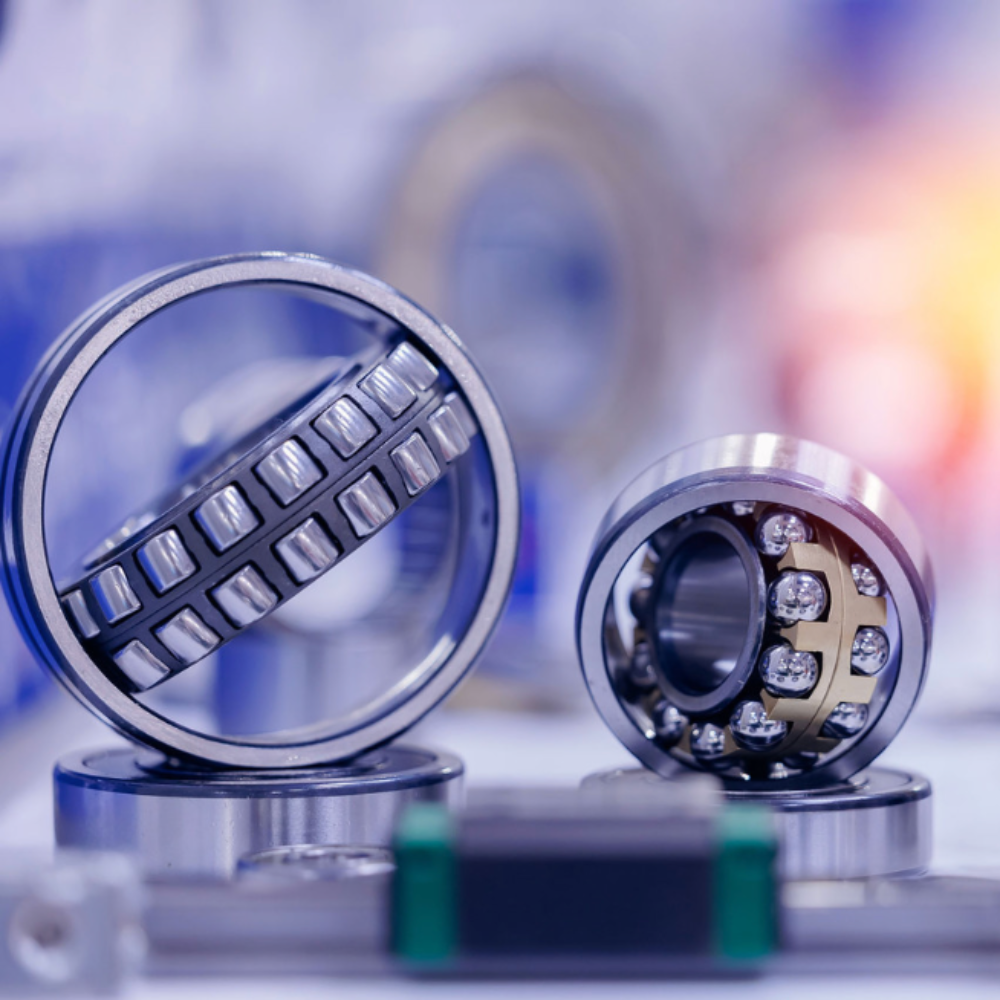
Spherical roller bearings for misalignment tolerance
-
Tapered roller bearings for combined load capacity
-
Cylindrical roller bearings for high radial loads
-
Mounted bearing units for simplified installation in heavy-duty frames
Each option offers advantages depending on the application requirements and operating environment.
Common mistakes in high-load bearing selection
A frequent issue in industrial maintenance is replacing failed bearings with visually similar alternatives that do not meet the original load requirements.
Typical mistakes include:
-
Undersizing the bearing to reduce cost
-
Ignoring axial load components
-
Using standard bearings in shock-load environments
-
Selecting incompatible sealing or lubrication systems
These shortcuts often result in repeated failures and higher long-term costs.
How Tayka Bearings supports high-load applications
At Tayka Bearings, we assist industrial buyers and maintenance teams by evaluating both technical data and real operating conditions.
Our support includes:
-
Identifying suitable bearing types for heavy-load environments
-
Offering equivalent or alternative solutions when original parts are unavailable
-
Consolidating bearings and sealing products into a single supply process
-
Supporting urgent replacements with reliable sourcing options
This approach helps reduce downtime risks while ensuring long-term operational stability.
Conclusion
High-load applications require more than standard bearing selection practices. By understanding load behavior and choosing the right bearing design, industrial operators can significantly improve reliability and reduce unexpected failures.
Proper selection is not just a technical decision—it is a critical operational strategy.